Search Clear Form

Search Clear Form

Search Clear Form

Search Clear Form

Guard against low, moderate, or heavy environmental contamination and splashing liquids. All GMN Labyrinth Seals are non-contact and operate completely without friction.

Jump to Products

What is a Labyrinth Seal?

A non-contact labyrinth seal is a type of mechanical seal designed by layering together metal sealing plates that combine to form a bunch of angles in a “maze-like” pattern. This complex maze-like pattern prevents contaminants and splashing liquids from hitting the bearing.

Labyrinth seals are usually the first barrier of protection and help prevent bearing failure. These special seals protect high precision bearings from rust, contamination and dirt, which help eliminate bearing failures or unexpected maintenance issues.

In complex sealing systems when a contact seal is required, using our non-contact labyrinth seal before the contact seal will boost the sealing protection. We recommend this setup for harsh and dusty environments that lead to contamination. Many times, dust can be the contaminant that enters into the rotating application. Pre-greasing the labyrinth seal will stop the dust from getting into the bearing system.

Contact Us

Benefits of Our GMN Manufactured Non-Contact Labyrinth Seals:

  • Have a compact design & are easy to install.
  • Operates without friction.
  • Doesn’t increase operating temperatures.
  • Guards against all types of contamination & splashing liquids
  • Has a long lifespan

Operating with contact seals? Easily swap out rubber or contact seals with non-contact labyrinth seals, especially when operating at higher speeds. For extra protection, we recommend placing our non-contact seals before the contact seal in your application.

Important: All GMN labyrinth seals are directionally specific when mounted, therefore make sure you double check the contaminate side of the labyrinth seal before you install.


To learn more about labyrinth seals and their benefits, check out our Labyrinth Seal Guide.

GMN’s Non-Contact Labyrinth Seal Product Line

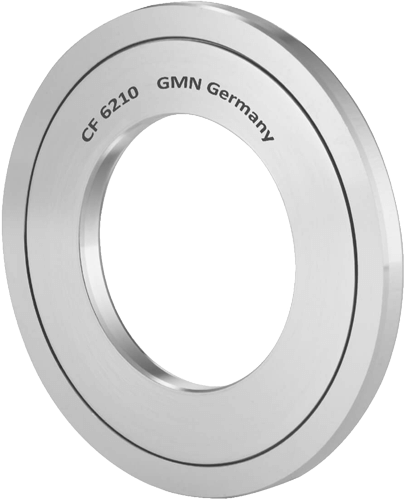
CF Seals

Protect Against Heavy Amounts of Contamination & Splashing Liquids.

Our CF Seals offer the best protection for all types of environmental contamination and splashing liquids.

CF Seals are proprietary to GMN and are the newest advancement in non-contact, labyrinth seal technology.

CF Seals sit directly against the bearing, eliminating the need for added space inside a spindle and they offer 100% sealing efficiency against splashing liquids.

CF Seal stats-at-a-glance:

  • Shaft Diameter (d) (mm): 10 to 100
  • Outer Diameter (D) (mm): 30 to 150
  • Width (mm): 6
  • Material Choices: Nitride Steel or Aluminum
  • Max Temp: -40° F (-40° C) to 392° F (200° C) (Aluminum)
  • Matched bearing sizes

View All CF Labyrinth Seals

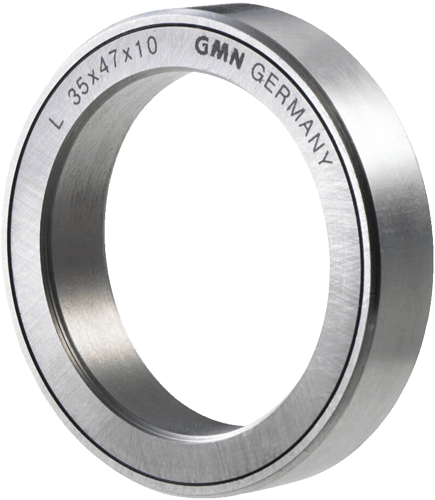
Type L Labyrinth Seals

Protect Against Low Amounts of Contamination & Splashing Liquids

Our GMN Type L Labyrinth seals are made from non-separable rings layered on top of each other and combined. The inner ring is made of steel and the outer ring is made of aluminum. They come ready to install.

Type L Labyrinth Seal Stats-at-a-Glance

  • Shaft Diameter (d) (mm): 15 to 210
  • Outer Diameter (D) (mm): 26 to 250
  • Width (mm): 10, 14, 15, 20, 22
  • Max Temp: 340° F (170° C)

View All Type L Labyrinth Seals

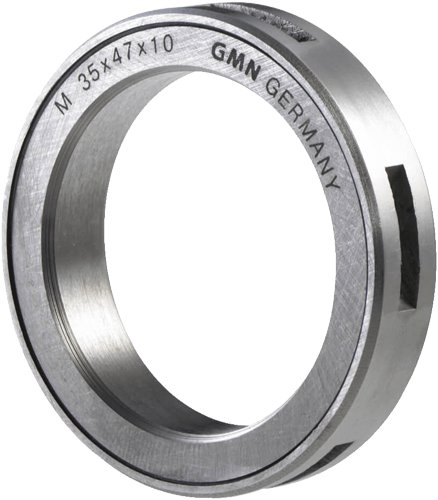
Type M Labyrinth Seal

Protect Against Moderate Amounts of Contamination & Splashing Liquids

Our GMN Type M Labyrinth seals have the same sealing technology as the L Type seals but are designed with outer ring grooves to allow moderate direct spray splashing particles to be centrifuged out. Liquid gets pushed out through outer grooves when in rotation.

Type M Labyrinth Seal Stats-at-a-Glance:

  • Shaft Diameter (d) (mm): 15 to 210
  • Outer Diameter (D) (mm): 26 to 250
  • Width (mm): 10, 14, 15, 20, 22
  • Max Temp: 340° F (170° C)

View All M Labyrinth Seals

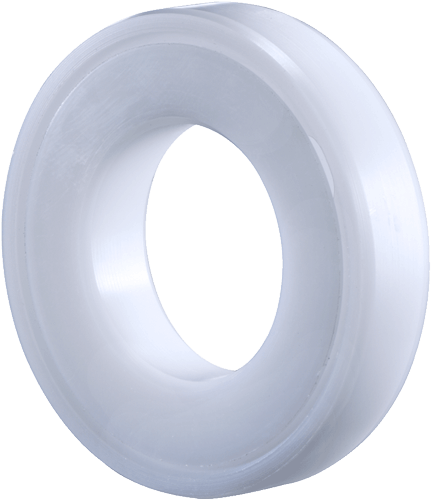
Type S Gap Seal

Our GMN Gap Seals are manufactured with plastic and are not a good choice for machine tool applications. They are a great choice for food conveyors and food manufacturing facilities that direct spray machines to clean them off.

Our Gap Seals are high-quality plastic seals and are extremely resistant against chemicals, bacteria, fungi, and splashing water.

  • Shaft Diameter (mm): 10 to 160
  • Width (mm): 10, 12, 15
  • For heavy contamination and lightly splashing liquids
  • Temp Range: -40° F (-40° C) to 140° F (60° C)

Also available with drain groove for heavy splashing liquids.

View All Type S Gap Seals

Lip Seal vs. Non-Contact Labyrinth Seal

The table below highlights the different results you will get when using a lip seal over a non-contact labyrinth seal.

Criteria LIP SEAL NON-CONTACT LABYRINTH SEAL
Usage Degradation by friction none
Loss of Power by friction None: Energy saving results (may lead to smaller driving units)
Temperature Increase see diagram below none
Max. Speed
Limit
depending on material none
Lifetime limited by wear & tare unlimited
Lubrication required at the sealing location no lubrication required
Mating Parts Shafts operating at higher speeds require hardening & grinding hardening and grinding not needed
Temperature Range Limited by lip seal
material
(plastic or rubber)
Large Temperature Range

Plastic: Very low temps -40°F (-40°C) to very high temps 284°F (140°C)

Metallic Material Steel + Aluminum: Very low temps -40°F (-40°C) to even higher temps 340°F (171°C)
Space Requirement Small Small
(only GMN labyrinth seals)
Field of Applications grease lubrication grease lubrication
  oil lubrication oil lubrication if oil level below sealing diameter oil mist lubrication
  water – limited, as water may increase the friction at sealing location water – with the use of rust proof materials and level below sealing diameter
  fine and coarse granular contamination not possible, as this environment causes rapid wear of the lips fine and coarse granular contamination can be sealed reliably if applied to horizontal shaft

Chart illustrates a spindle running with a lip seal vs a spindle running with a GMN Labyrinth Seals.

Note: Temperature increase caused by the bearings – not by the seal.

Contact GMN Bearing for Non-Contact Labyrinth Seals

Our on-site engineers are here to help you find the best labyrinth seal for your application. Request a quote or contact us today!

Contact Us

Labyrinth Seal FAQs

What are labyrinth seals made of?

GMN Type L and Type M labyrinth seals are made with inner rings of steel and outer rings of aluminum. Our CF labyrinth seals, which are unique to GMN and ideal for protection against heavy amounts of contamination or splashing, are available in either nitride steel, aluminum, or custom materials upon request.

How does a labyrinth seal work?

A labyrinth seal uses a non-contact type of sealing system that reduces leakage by forcing fluid or contaminants through a maze of grooves inside the seal, hence the term labyrinth. As fluid is squeezed through the narrow gaps on the outer part of the seal, it’s dumped into pockets of the maze-like grooves. At each twist and turn, the fluid loses energy and eventually becomes too weak to move farther than the end of the maze; very little, if anything, makes it through.

To learn more about how a labyrinth seal works, check out our comprehensive Labyrinth Seal Guide.

How are labyrinth seals installed?

Labyrinth seals are installed with a tool that will push both the inner and outer races at the same time.  This will ensure that the inner and outer races are aligned axially, a key aspect of a proper installation.  The shaft and housing tolerances are also key to prevent a relative rotation and can be found on the product data sheets or in the GMN labyrinth seal catalog.

Why should a labyrinth seal be used?

A labyrinth seal limits or eliminates leakage without the parts actually touching, so there’s no wear. This is what makes labyrinth seals especially reliable in high-speed or high-temperature applications where other seals would wear out.  Labyrinth seals also come through in the clutch when efficiency is of the utmost importance.  Because there is no contact and high efficiency of sealing, there is no power loss or heat generation from seal rubbing that is common among other seal types.

What industries and applications use labyrinth seals?

Labyrinth seals are used across many industries where equipment runs fast, hot, or for long periods in between maintenance. For example, labyrinth seals can be found in power generation (steam and gas turbines), oil and gas (compressors and pumps), aerospace (jet engines), and manufacturing equipment like motors, blowers, or pumps.

Can GMN's labyrinth seals be customized for specific applications?

The number one customization of GMN Labyrinth seals is a specific or special material.  This can range from stainless steel to bronze or another custom material.  The reasons for this can vary from preventing corrosion to specific contaminant or material compatibility. 

Our team is here to help you understand the best labyrinth seal design and material for your application. Check out our Labyrinth Seal Design guide to learn more.

How often should a labyrinth seal be replaced?

Because labyrinth seals do not have any wear, the seal itself can last the life of the application/unit.  Therefore, there is no repair sequence or timeframe. 

Desktop Tablet Mobile