Search Clear Form

Search Clear Form

Search Clear Form

Search Clear Form

We stock GMN manufactured high precision bearings, manufactured in ABEC 7 (P4+) accuracy classes with ABEC 9 (P2) running accuracy. GMN bearings are known for reliability, precision, and quality since 1908.

Our large inventory of high precision bearings is available in many sizes, and options. Most major precision bearing brands can be interchanged with a GMN high precision bearing. 99% of our orders are shipped out the same day the PO is sent!

Our High Precision Ball Bearings

Applications that operate at high speeds, carry heavy loads, and/or require tight rigidity usually require an ABEC 7 high precision bearing. Our GMN German-manufactured, ABEC 7 high precision bearings are a great choice for these applications.

Our top product lines for precision bearings include angular contact ball bearings and radial ball bearings.

Angular Contact Ball Bearings

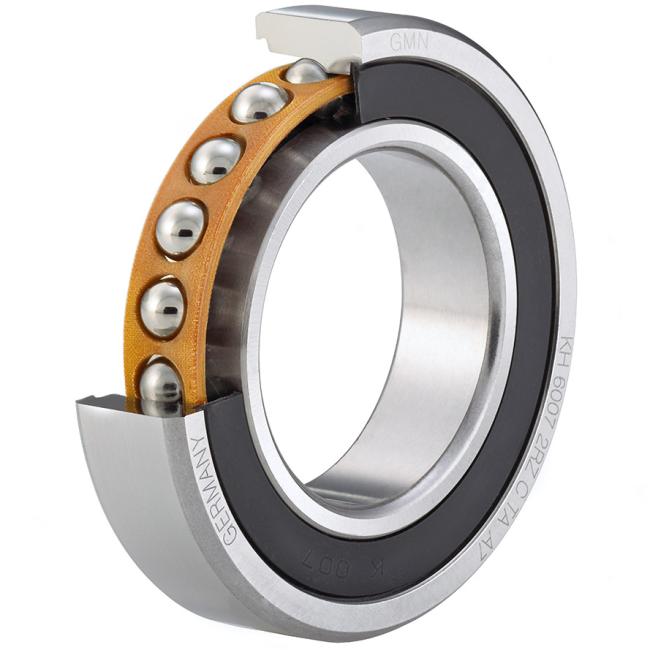
Angular contact bearings, also known as spindle bearings, support high RPMs, medium to heavy loads, & axial loads in one direction. Our angular contact bearing product lines include our S, SM, and KH series.

Sizes (mm) & speeds (RPM) ranging from:

ID (d): 5 to 120 OD (D): 14 to 180
W (b): 4 to 28 Speed (RPM): 9,700 to 287,500

Single row, with your choice of steel or ceramic balls and contact angles at 15° to 25°
Browse all Angular Contact Bearings

Radial Ball Bearings

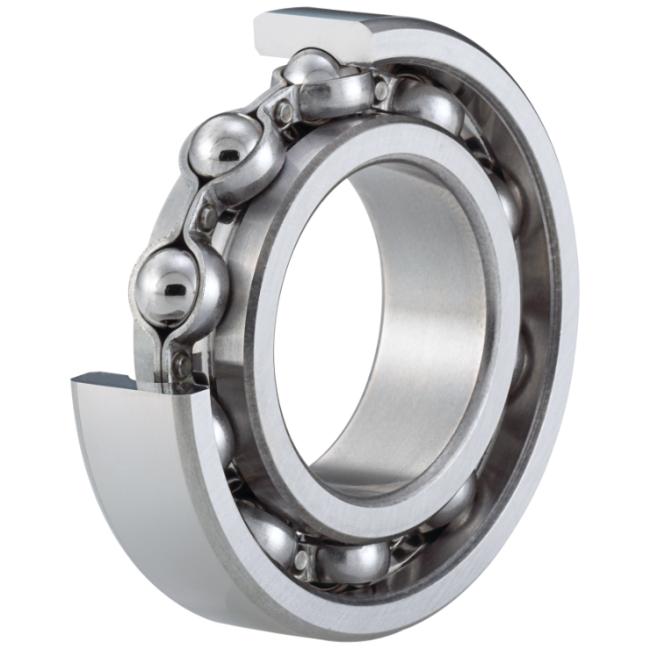
Radial ball bearings, also known as deep groove ball bearings, support low to moderate RPMs, medium loads in both axial directions. GMN’s top radial ball bearings include our 6000 & 6200 series, both manufactured to ISO 15 standards.

Internal clearance options: C2, C3, C4.

Sizes (mm) & speeds ranging from:

ID (d): 5 to 40 OD (D): 16 to 80
W (b): 5 to 18 Speed (RPM): 22,500 to 129,375

Non-separable bearings with either steel or ceramic balls & a standard contact angle of 8°

Browse all Radial Ball Bearings

Other Ball Bearing Brands We Supply

Along with our GMN manufactured ball bearing products, we supply ABEC 5 radial bearings from ORS. This includes the ORS THIN, 6000, 6200, and 6300 series.

Reach out to our engineers today to find the ball bearing that best fits your needs!

Browse our supply of ORS Radial Bearings

Special High Precision Bearings

Applications that operate in extreme environments typically require special bearings. We offer customized bearing options to best fit applications such as:

  • Vacuum environments with no oxygen (outer space solar panels)
  • Semiconductors that operate in very high heat conditions
  • Touchdown bearings that perform in intense environments
  • Medical devices that operate in a sterile clean room

Request Information

Benefits of Using Precision Ball Bearings

Precision ball bearings deliver smoother operation, longer life, and higher speed capability than standard bearings. Built to tighter tolerances with premium materials, they can handle higher loads and demanding conditions without compromising reliability. That means less downtime, fewer replacements, and consistent results for industries like aerospace, robotics, medical devices, and precision manufacturing, where failure isn’t an option.

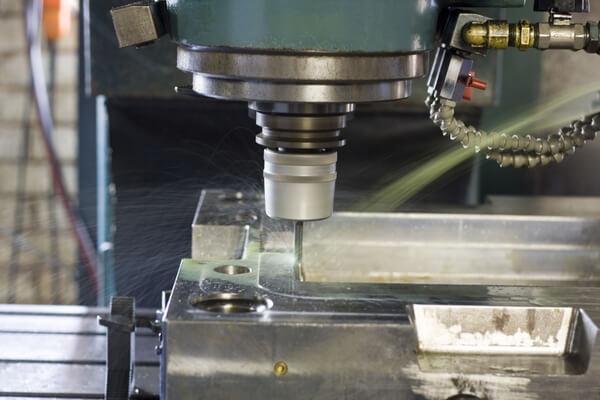
spindle application

What Applications Use Precision Ball Bearings?

Bearings are used across industries such as aerospace, robotics & automation, power generation, medical, construction, automotive, and more. Our engineers work with a variety of applications. This includes, but is not limited to:

  • Spindles
  • Metal Cutting & woodworking spindles
  • Grinders
  • Vacuum pumps
  • Semiconductor components
  • High-speed rolling mills
  • Printers
  • Race cars
  • Turbochargers

Browse Markets & Applications

Contact GMN Bearing USA for Precision Bearings!

Give our team a call today to learn more about our ball bearing options!

Contact Us

Precision Bearing FAQ

Do I need Angular Contact or Radial Ball Bearing?

Generally speaking, if your precision bearing will be operating at high speeds with heavy loads, you will probably need an Angular Contact Bearing. These bearings are optimized for higher speeds and are designed with more balls per bearing.

If you aren't using your bearing at high operational speeds or you don't have the machine space for a matched set of bearings then Radial Ball Bearings will probably be your best fit. To learn more about the differences between these bearing types, check out our guide: Radial Ball Bearings Versus Angular Contact Bearings

What precision standards do we have for our bearings?

Bearing precision is important, especially if your equipment is using the bearing at max speed. Precision classes set the bearing properties to ensure uniformity and regulation standards are met.

Our Manufactured Bearing Standards:

  • Tolerance standards for dimensional, form and running accuracy: ISO 492, and DIN 620
  • Manufactured to precision P4+ and precision class UP+
  • Annular Bearing Engineering Committee (ABEC): ABEC 7 and ABEC 9
  • For special applications (like vacuum pumps, gyroscopes and optical systems) we manufacture bearings to the highest internal tolerance classes.
Is GMN a Bearing Distributor?

No. We carry GMN high precision bearings, freewheel clutches and seals. All manufactured at GMN Germany.

Because of the relationships we have built over time, we do stock other product lines from quality brands. We do this only if GMN Germany doesn’t manufacture an equivalent GMN product.

For example, we offer ORS radial ball bearings because GMN doesn’t produce A5 radial ball bearings, a product that will support speeds as low as 3300 rpm. We heard from our customers that they need these types of radial ball bearings for certain applications, so we made a decision to start carrying ORS radial ball bearings.

What is a precision ball bearing?

A precision ball bearing is made with much tighter tolerances than a standard bearing, which means every part is carefully crafted for accuracy. Precision bearings use smooth, hardened steel or ceramic balls that roll between two precisely machined raceways. This design cuts down on friction, supports both radial and axial loads, and allows the bearing to run faster, with less vibration, and more consistent performance.

How long do precision bearings typically last?

Precision ball bearings can last for many years when they’re properly installed and well-maintained. With the right lubrication and care, they handle tough conditions and keep running smoothly, helping reduce downtime and maintenance costs.

Of course, how long they last varies widely depending on the loads, speeds, and operating environment, but you can generally expect reliable performance over a long period.

How do I know when to replace my precision ball bearing?

Keeping an eye on your equipment with regular checks can help catch small issues before they become big problems. If you notice your machines aren’t running as smoothly as they used to or you’re needing to do maintenance more often, it’s a good idea to take a closer look at the bearings. Signs like unusual noises, more vibration, overheating, visible wear, or corrosion usually mean it’s time to replace them.

What can cause bearing failure?

Bearings can fail for a number of reasons. Not having enough lubricant or using the wrong kind can cause them to wear out faster. Dirt, dust, or moisture inside the raceways can also damage the bearing, as well as misalignment, overloading, etc. Keeping an eye on these factors and practicing proper installation can help keep your bearings running smoothly longer.

What is the difference between ABEC 7 and ABEC 9 bearings?

Both ABEC 7 and ABEC 9 bearings are made with high precision, but ABEC 9 bearings are built to even tighter tolerance standards. That means ABEC 9 bearings run smoother, handle higher speeds, and offer better accuracy. For most applications, ABEC 7 bearings do a great job and are more cost-effective, but if you need the absolute best performance for high-speed or ultra-precise equipment, ABEC 9 is the way to go.

What materials are GMN precision bearings made of?

GMN precision ball bearings are made from top-quality hardened steel. In some cases, we use ceramic balls, which help reduce friction even more and handle higher speeds and heat better. This combination ensures the bearings perform reliably, even in the toughest conditions.

Desktop Tablet Mobile